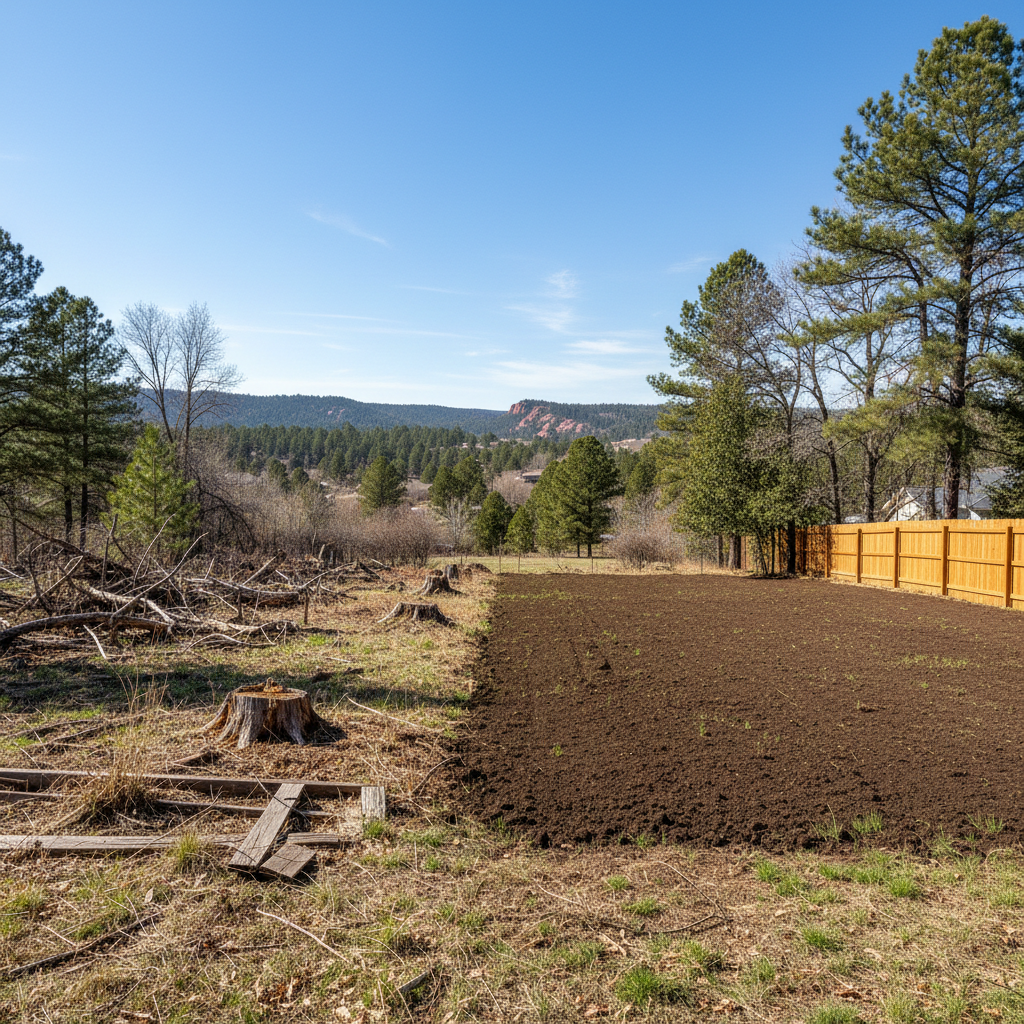
Got some land in Hot Springs you're looking to clear? Maybe you're putting up a new building, expanding your yard, or just trying to take back some overgrown acreage. Really, you've got two main ways to tackle it: forestry mulching or the old-fashioned clearing methods. I've seen both approaches used plenty around here, and while each has its place, one usually comes out ahead for most folks.
What's the Difference, Anyway?
Let's keep it simple. Traditional land clearing is probably what you're picturing: big excavators, bulldozers, chainsaws, and then a whole lot of hauling stuff away or burning it. They're pulling out trees, stumps, brush, rocks—the whole shebang. When they're done, you're left with pretty much bare earth, all set for whatever you're planning next.
Forestry mulching, on the other hand, uses a special machine. Often, it's an excavator or a skid steer with a huge mulching head on the front. This head just grinds up everything in its path—trees, brush, stumps—right where it stands. It turns all that organic material into a layer of wood chips and mulch, leaving it right there on the ground.
Cost: Where Does Your Money Go?
This is usually the first thing people ask, and it's a fair question. Generally speaking, forestry mulching almost always costs less upfront. Why? Because you're paying for one machine, one operator, and no hauling. There's no separate crew for stump grinding, no dump fees, and no burning permits or fire watch to worry about. For a typical lot in the Black Hills, especially if you're dealing with a bunch of smaller Ponderosa pines and brush, mulching can save you a good chunk of change.
Traditional clearing means more equipment, more people working, and the extra cost of getting rid of all that material. If you're building a house and need a perfectly flat, dirt-only pad, you'll still need some traditional earthwork after mulching, but the initial clearing cost will be lower.
Durability & Erosion Control
This is where mulching really shines, especially right here in our neck of the woods. Hot Springs, with its hilly terrain and sometimes sandy or silty soil, can be pretty susceptible to erosion. When you traditionally clear a site, you expose bare dirt. A heavy rain or a strong wind can quickly wash away or blow away that topsoil, creating ruts and making your land unstable. Not ideal, right?
With forestry mulching, that layer of wood chips acts like a natural blanket. It protects the soil from hard rain, slows down water runoff, and really helps prevent erosion. It's like putting natural armor on your land. This is a big deal if you're on a slope or near a waterway. Plus, that mulch eventually breaks down, adding nutrients back into the soil, which is fantastic for future plantings.
Maintenance Down the Road
If you traditionally clear a site and then just leave it, you're going to see weeds and new growth popping up pretty fast. Nature hates an empty space, and it'll try to reclaim that bare ground. You'll be fighting weeds and saplings for quite a while.
The mulch layer from forestry mulching helps keep new weeds from growing. It won't stop everything, but it definitely gives you a head start. It also helps the soil hold onto moisture, which can be a real lifesaver during our dry spells. You'll still need to manage new growth, but it's usually not as intense as on bare soil.
Appearance: What Look Are You Going For?
This really comes down to personal preference. If you want a perfectly manicured, golf-course-like lawn right away, traditional clearing followed by grading and seeding is your route. It gives you a clean slate.
Forestry mulching leaves a more natural, rustic look. You'll have a layer of wood chips and organic material. Some people absolutely love this, especially if they're aiming for a more natural landscape or planning to reseed with native grasses. It might look a little rough at first, but it settles down over time. It's not a pristine, flat surface, but it's often exactly what people want for a more natural transition from forest to yard.
My Recommendation for Hot Springs Homeowners
For most homeowners in Hot Springs looking to clear land for a new home, a bigger yard, or just to manage overgrown areas, I almost always suggest forestry mulching first. It's more affordable, much better at preventing erosion (which is super important on our hillsides), and leaves you with a healthier soil base.
If you're building, you'll still need some traditional earthwork for your foundation and final grading, but mulching handles the heavy lifting of tree and brush removal efficiently and responsibly. It's an environmentally friendlier option, too, since you're not hauling away tons of material or burning it, which can be a real worry with our dry summers.
We've done a lot of mulching jobs with New Look Tree around the area, from clearing fire breaks to getting building sites ready, and the results really speak for themselves. It's a smart choice for our local conditions.
Think about what you ultimately want to achieve. If it's a clean, bare pad for construction, mulching gets you most of the way there for less money. If you're just reclaiming some overgrown woods for a more park-like setting, mulching is often the perfect, one-step solution. Give us a call, and we can walk your property and talk through what makes the most sense for your specific project.